Our Methodology
An engineering approach to mould assessment
Mould is a symptom. Moisture is the cause. Our methodology is built to find both — using structured site investigation, calibrated instruments and accredited laboratory analysis.
01 · Why methodology matters
Without a system, you'll miss what matters
Most mould assessments fail in the same way: a tape-lift sample, a one-page report, and no investigation of why the moisture is there in the first place. The visible mould gets cleaned, the source is left untouched, and the problem returns within months.
A structured methodology forces you to look beyond what's obvious — at HVAC behaviour, building envelope performance, occupant patterns and seasonal psychrometrics. It produces reports that are clear and structured — useful to remediation contractors, facilities teams and insurers alike.
Our methodology is built on engineering-grade investigation, not a sampling kit.
02 · Our investigation framework
A structured site investigation, every time
Every assessment follows the same eight-stage process — scaled for the building, never short-cut.
- 01
Pre-site review
Drawings, history, complaints, prior reports and HVAC strategy reviewed before we set foot on site.
- 02
External inspection
Roof, façade, drainage and ground interface — the building envelope as the first line of defence.
- 03
Internal room-by-room
Systematic walkthrough of each space, documenting visible indicators, odours and occupant feedback. Understanding how a building is constructed, how its HVAC operates, and where moisture typically accumulates is what makes a walkthrough useful. Without that background, you're looking at symptoms. With it, you're reading the building.
- 04
Instrument readings
Calibrated readings of temperature, relative humidity, surface moisture and differential pressure across the building.
- 05
Sampling
Targeted air, surface and bulk sampling guided by the working hypothesis — not blanket grab samples.
- 06
Lab analysis
Samples processed by accredited laboratories using established mycological and microbiological methods.
- 07
Findings
Field data, lab results and building science synthesised into a clear cause-and-effect picture.
- 08
Report
A structured written report with prioritised recommendations and the reasoning behind every conclusion.
03 · Instruments & calibration
Calibrated instruments, traceable readings
All field instruments are calibrated against manufacturer reference standards on a documented schedule. Calibration certificates are available on request and referenced in every report where readings are relied upon.
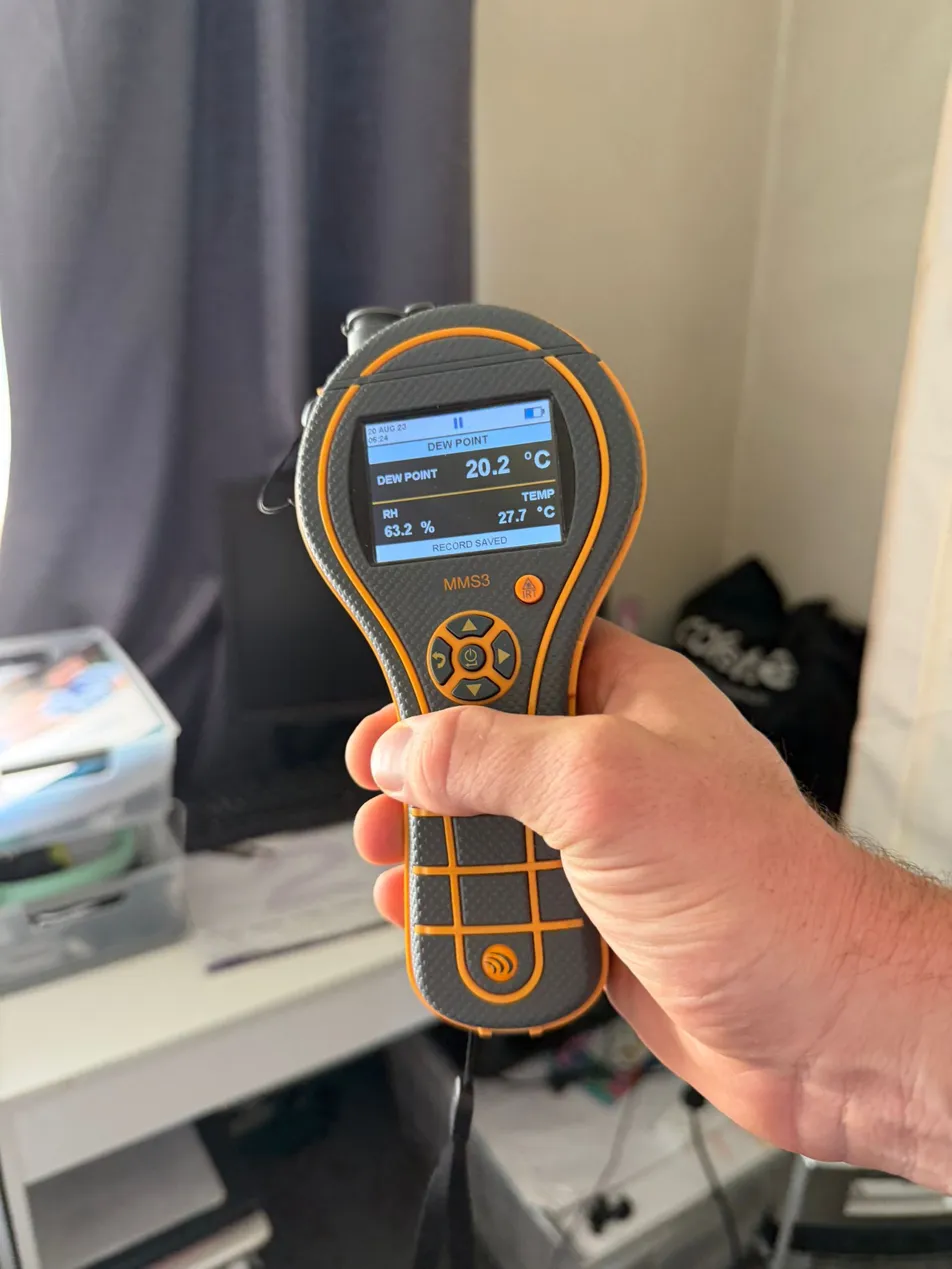
Thermo-hygrometer
Temperature, relative humidity and dew point — the basis of every condensation and mould-risk assessment.
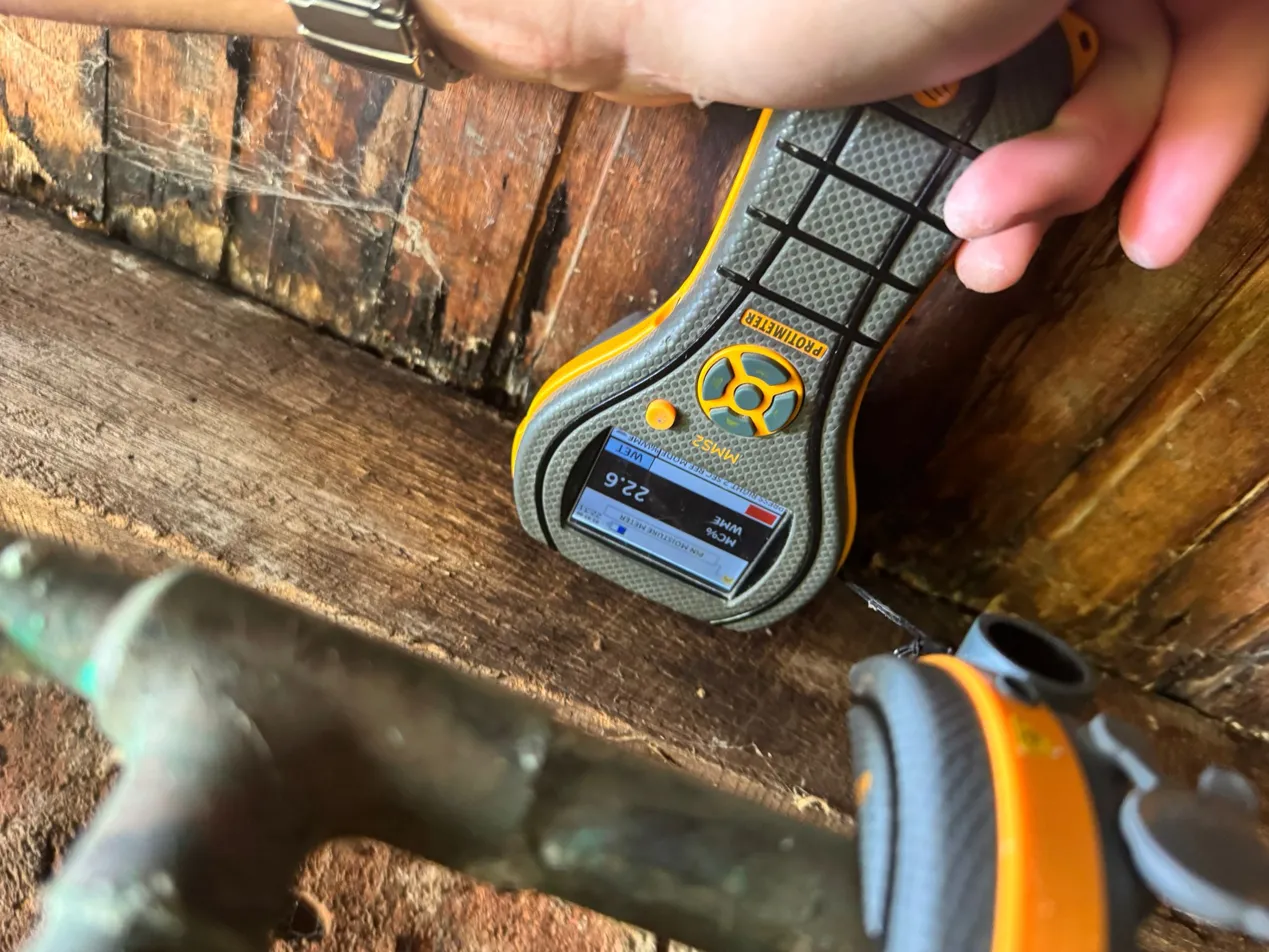
Moisture meters
Pin and pinless meters for relative moisture comparison across walls, floors and substrates.
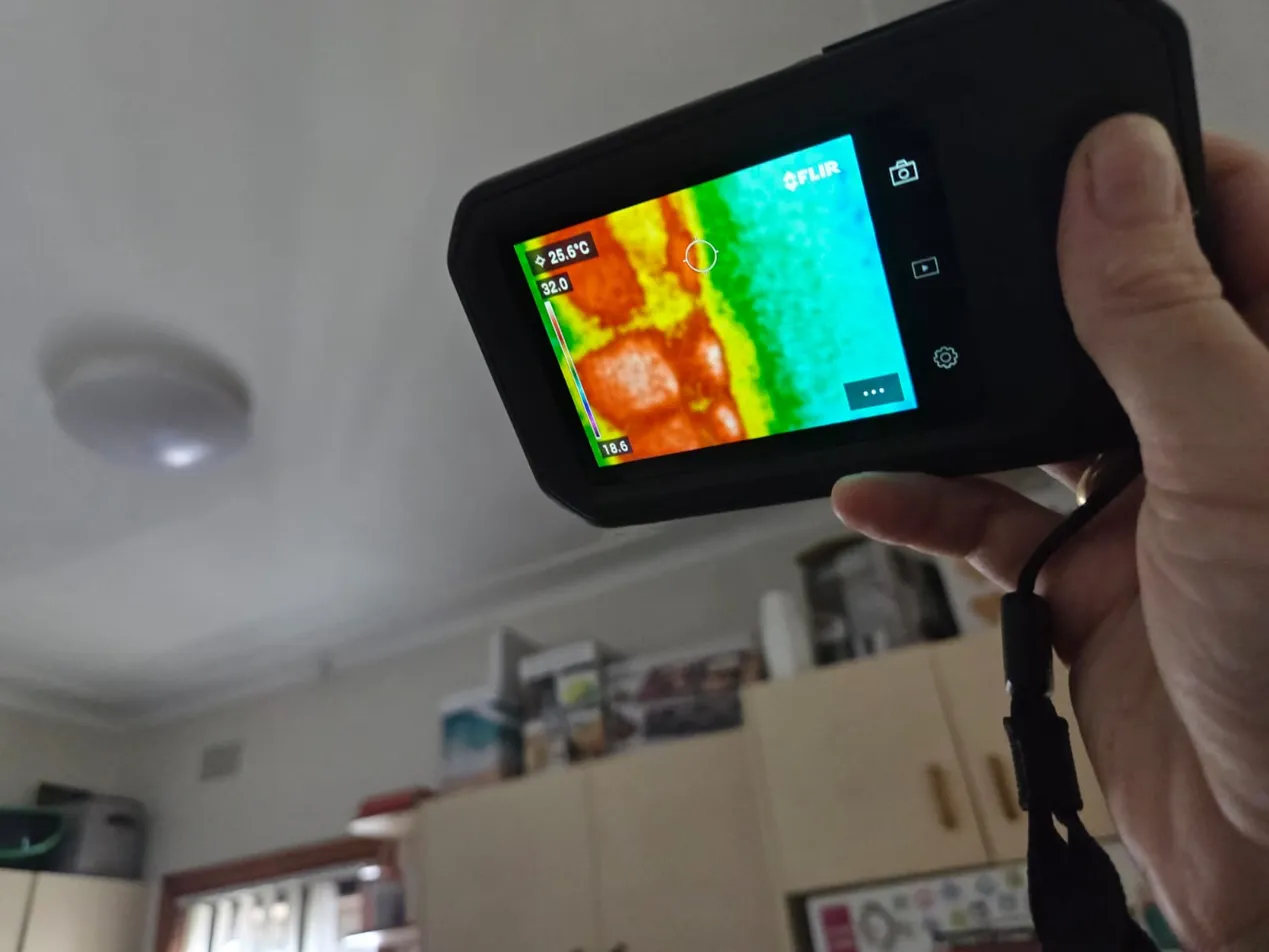
Thermal imaging camera
Infrared thermography to identify thermal bridging, hidden moisture and HVAC anomalies.
ATP meter
Adenosine triphosphate testing for biological surface contamination — useful for verification and triage.
Air sampling pumps
Calibrated pumps for spore-trap and culturable sampling, matched to laboratory protocols.
04 · Laboratory partners
Accredited laboratories, reliable results
All samples — air, surface and bulk — are submitted to independent, accredited laboratories specialising in mycological and microbiological analysis. We do not interpret in-house cultures or rely on field-only methods for definitive results.
Results are interpreted against established Australian and international guidelines, including AS/NZS standards where applicable, the IICRC S520 Standard for Professional Mould Remediation, and World Health Organization indoor air quality guidance.
Lab reports are appended in full to every assessment, so reviewers can verify the chain of evidence themselves.
05 · On sampling
Sampling supports the investigation. It doesn't replace it.
Air and surface sampling has a role in a mould assessment — but it's a supporting role. The scientific literature on spore trap air sampling is clear that results carry significant uncertainty, and that a number on a lab report only means something when it's interpreted in the context of a proper investigation.
We collect samples where they can answer a specific question — not as a default first step. Before any samples are taken, we've already formed a working hypothesis about moisture source and cause. Sampling either supports that hypothesis or challenges it. It's one input among many, alongside moisture readings, thermal imaging, HVAC data and building history.
We use NATA-accredited laboratories and we report results in full. We also report what the results can and can't tell you — because that's part of giving you information you can actually act on.
A hypothesis has to come before samples are collected — not after. If you don't know what question you're trying to answer before you collect a sample, the result won't tell you anything useful.
06 · Report standards
Reports built for every audience that will read them
A ProMould report is written to be useful to the people who will act on it — facilities managers, remediation contractors and insurers. It includes a clear summary, the methodology used, what we observed, what the lab found, what we think caused it, and what we'd suggest doing about it. The reasoning is shown so anyone reviewing it can follow how we got there.
Every report includes an executive summary, methodology, observations and readings, laboratory results, conclusions on cause, and prioritised recommendations — with the reasoning shown so any qualified reviewer can follow our logic and challenge it.
That structure is what turns an inspection into evidence. It also serves as the documented risk management record a PCBU needs to demonstrate compliance with the Managing the Risks of Biological Hazards at Work Code of Practice.
Bring our methodology to your facility
Talk to a ProMould engineer about a structured assessment for your building.